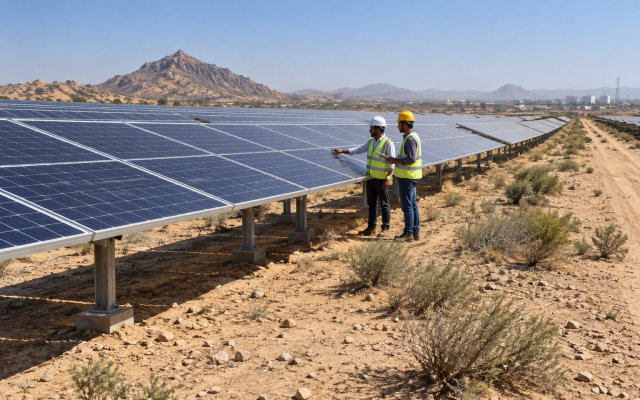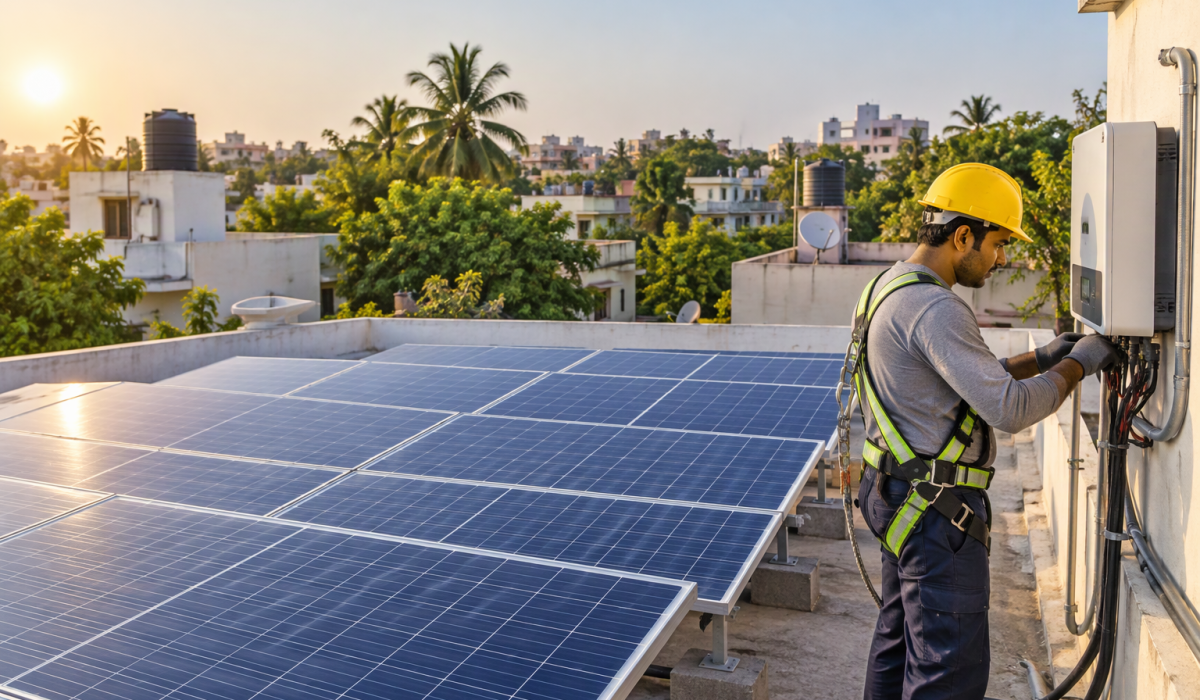
India’s flagship rooftop solar programme has reached 60 lakh households, about 60% of its one-crore target, with roughly 17.9 GW of residential rooftop capacity commissioned under the scheme, according to Ministry of New and Renewable Energy figures reported by pv magazine India. The milestone arrives with the March 2027 deadline still ahead.
The numbers describe a scheme that has moved from pilot to mass market. Subsidies worth ₹33,642 crore have been disbursed through direct benefit transfer, more than 2.5 lakh workers have been trained, and about 37,000 vendors are registered on the national portal. By August, nearly 19 lakh participating households reported zero electricity bills.


Why the next 40 lakh are harder
The first half of the target was carried by early adopters, often in states with smoother approvals. The second half has to reach smaller roofs, rented homes, housing societies and districts where the local distribution company is slow to issue feasibility approvals or commission net meters.
Growth has still been steep. The Ministry has described a pace that went from one lakh homes in 118 days at the start of the scheme to one lakh every six days.
What the subsidy pays
For residential households, central financial assistance is slab-based:
- ₹30,000 per kW for systems up to 2 kW
- ₹18,000 per kW for the third kW
- A maximum of ₹78,000 for systems of 3 kW and above
A typical 3 kW system is sized to generate enough electricity for up to 300 units a month, which is why the scheme is marketed as “Muft Bijli” for households with moderate consumption. The subsidy is credited to the beneficiary’s bank account after installation and net metering, not deducted by the vendor.
How the process works
- Register on the national portal with an electricity bill and Aadhaar details.
- Wait for feasibility approval from the local distribution company.
- Choose a registered vendor and install a net-metered system.
- Apply for net metering; after inspection, the subsidy is transferred directly.
Check before you sign
- Confirm the vendor is listed on the portal for your state.
- Ask how your state treats exports — net metering, net billing and gross metering produce very different savings.
- Match system size to sanctioned load and usable roof area, not to the maximum subsidy.
- Get module and inverter warranties in writing, with service terms.
The bottlenecks that remain
Net-metering rules differ by state and have been revised repeatedly, which makes payback periods hard to compare. Distribution companies face application backlogs. And rapid expansion has raised questions about installation quality, after-sales service and whether some vendors overstate savings.
The bottom line
PM Surya Ghar has done what few Indian energy schemes have: turned rooftop solar into a mass-market household purchase. Whether it reaches one crore homes by March 2027 will depend less on demand than on the unglamorous work of approvals, meters and maintenance.