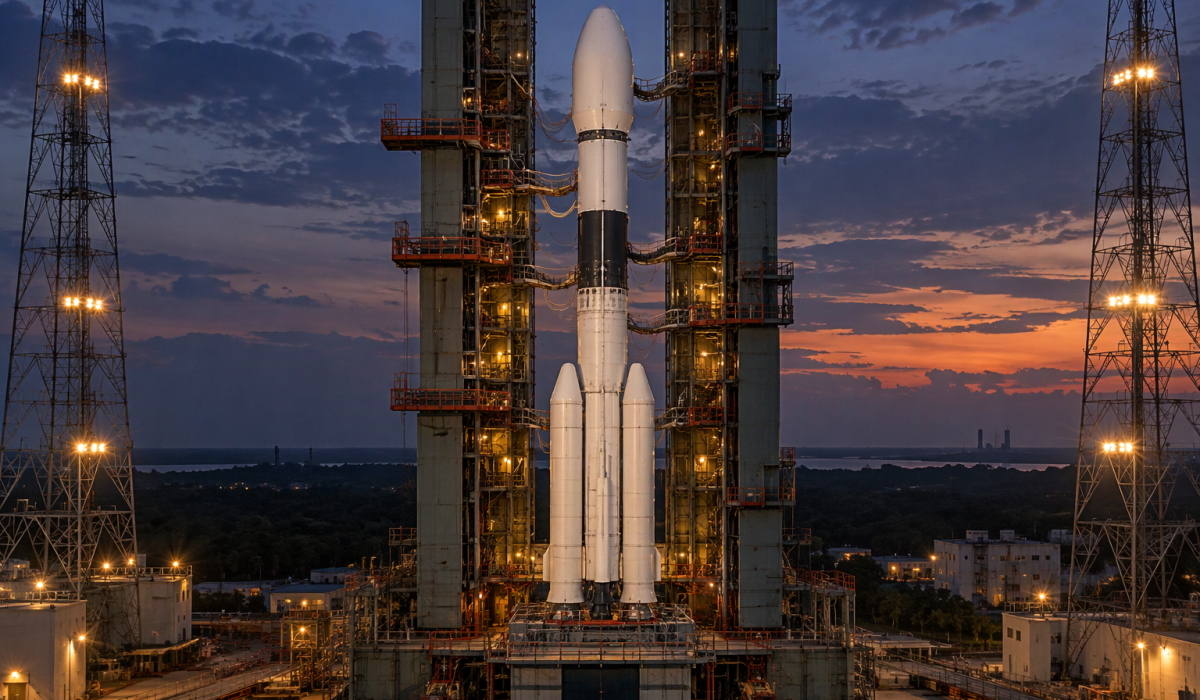
India’s navigation constellation has a new satellite in orbit after a late-night launch from the country’s spaceport on the Bay of Bengal.
The Indian Space Research Organisation launched NVS-03 aboard the GSLV-F18 rocket on 30 October at 23:20 IST, the agency said. The satellite was placed in its intended orbit and is part of the NavIC constellation.


What launched
NVS-03 is a second-generation satellite for NavIC, India’s regional navigation system. The NVS series is designed to replenish and upgrade the constellation with new signals and improved timing performance.
NavIC — short for Navigation with Indian Constellation — provides positioning, navigation and timing services over India and roughly 1,500 km beyond its borders. Its signals support transport, surveying, disaster response, power grids and precision agriculture.
Why NavIC matters
Satellite navigation is infrastructure. A country that depends entirely on foreign systems is exposed to decisions made elsewhere, including signal denial in a crisis. NavIC gives India an independent timing and positioning layer, and the NVS satellites keep it current.
The system also has commercial value: receivers built for NavIC can serve fleets, emergency services and machine control in South Asia, where geostationary coverage is strong.
A workhorse rocket
The GSLV is a three-stage launcher with an indigenous cryogenic upper stage, a technology India spent years mastering. Friday’s flight was the 20th GSLV launch, according to mission coverage.
What comes next
ISRO’s launch schedule points to an uncrewed Gaganyaan test as its next major milestone. The human spaceflight programme has been the agency’s most closely watched project; a successful uncrewed flight would move India closer to putting astronauts in orbit on an Indian rocket.
For now, the quiet success of GSLV-F18 is the kind of mission that matters most: routine, reliable and quietly essential.